

Other Pieces
Other Pieces is a collection of works by different writers, poets, pastors, theologians, and imaginative thinkers who've helped shape my attitude toward God, his presence in my life, and his activity in the world. I encourage you to follow the profile links to all these amazing authors. Besides this, a few great places to find recent work is Poetry Northwest | https://www.poetrynw.org/ and The Poetry Foundation | https://https://www.poetryfoundation.org/
Under A Supermoon
by Arthur Sze

Gazing at a supermoon when a portion of Earth’s shadow
      slides across the lunar surface,

I have no desire to twirl in space on an oxygenating cord;
      I have no desire to plunge

to the bottom of the Mariana Trench and observe snailfish.
      On the highway, someone

is driving to lab, to pueblo, to abandoned uranium mine
      and is always driving farther,

driving faster. I slow it down and rejoice in minutiae:
      a gold flare in cottonwood leaves,

the smell of split piñon and juniper in a garage,
      and recall Blake’s

if the fool would persist in his folly he would become wise.
      I don’t know that I am any wiser,

but I have persevered; as I gaze at the darkening craters
      and smell apples on branches

and on grass, I catch how this life has exploding, exploded,
      and birthing stars inside it.

Harm Animals
by Grace MacNair

I’m crossing a cow pasture, texting a friend
photos of a calf whose black and white
pansy-patterned face alternates between tugging
his mother’s udders and gazing up at me, motionless
with curiosity, even as the herd quivers, alarmed.
I once read a case study about a young boy
in trauma therapy who, at the close of each session,
would hide under the therapist’s chair,
cling to familiar toys, despite reassurance
that the therapist, the room, the chair, the toys
would be at the next session. To reestablish object permanence,
the boy wrote his name on a piece of paper,
asked the therapist to do the same, then tore
the paper in half, giving his name to the therapist,
keeping the therapist’s name for himself.
Psychologists claim we experience the world
we infer, not the world as it is. But what is the world?
My shadow extends into goldenrod and aster.
I slip behind a large oak. The cows regain their drowsiness.
Leaves susurrate an octave lower than yesterday
when the weather still passed for summer.
I close my eyes—the world as it is—
then open them again to text my friend.
“Farm animals” autocorrects to “harm animals.”
I follow up with: “FARM ANIMALS.”
My friend: “Lol harm animals—but that’s exactly what we are.”

Comorbidity
by John Wright

I don’t recall ever using that word
when discussing a risky
test or treatment with a patient.

Of course I’d assess the pros and cons
before taking a big step.
Take me for example, I’d review my

being over eighty,
my heart disease and hypertension,
narrowing of my carotids.

But when, discussing plans to remove
a kidney tumor, the doctor said,
Given your comorbidity,

I was offended
―a light flickered in the deepest cave
of my mind
where I keep in chains the fear of death.

How To Belong Be Alone
by Pádraig Ó Tuama

It all begins with knowing
nothing lasts forever,
so you might as well start packing now.
In the meantime,
practice being alive.

There will be a party
where you’ll feel like
nobody’s paying you attention.
And there will be a party
where attention’s all you’ll get.
What you need to do
is to remember
to talk to yourself
between these parties.

And,
again,
there will be a day,
─a decade─
where you won’t
fit in with your body
even though you’re in
the only body you’re in.

You need to control
your habit of forgetting
to breathe.

Remember when you were younger
and you practiced kissing on your arm?
You were on to something then.
Sometimes harm knows its own healing
Comfort knows its own intelligence.
Kindness too.
It needs no reason.

There is a you
telling you another story of you.
Listen to her.

Where do you feel
anxiety in your body?
The chest? The fist? The dream before waking?
The head that feels like it’s at the top of the swing
or the clutch of gut like falling
& falling & falling & falling
It knows something: you’re dying.
Try to stay alive.

For now, touch yourself.
I’m serious.

Touch your
self.
Take your hand
and place your hand
some place
upon your body.
And listen
to the community of madness
that
you are.
You are
such an
interesting conversation.

You belong
here.
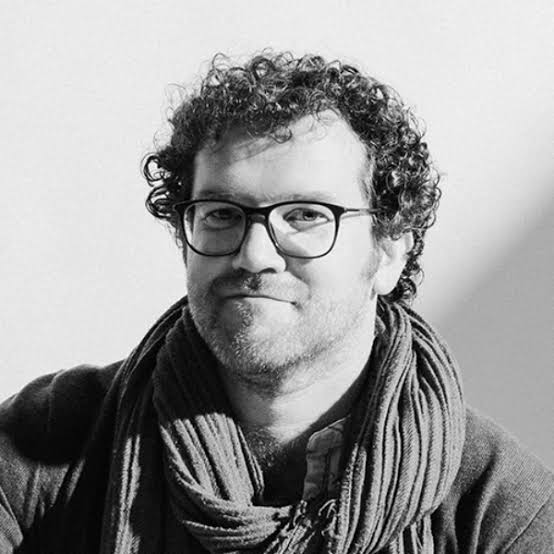
The Snake
by Joseph Powell

The summer after your death our trees
which most years were frosted and fruitless
bear loads I have to unburden.

Each room in the house is booby-trapped
with memories of half-lost joys.
So much fruit impossible to thin.

An imposed simplicity takes on the feeling
of an exile. Abandoned in an empty Eden,
I pick raspberries, blackcaps, blackberries

and freeze them on cookie sheets.
Bags and bags of fruit arranged like prisoners,
each guilty of untimely bounty.

Yet the yellow-striped garter snake coiled
in the leaves of the raspberry canes,
waiting for grasshoppers, seems right,
and the thin-waisted wasps I flick

off the ripe fruit. Trying to blend in,
I too wait in the green and yellow leaves,
wound inside a fading abundance,
arbiter of thorns, guardian of sweetness.
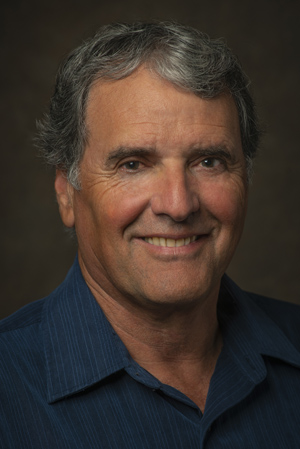
From The Ragamuffin Gospel
by Brennan Manning

"Because salvation is by grace through faith, I believe that among the countless number of people standing in front of the throne and in front of the Lamb, dressed in white robes and holding palms in their hands (see Revelation 7:9), I shall see the prostitute from the Kit-Kat Ranch in Carson City, Nevada, who tearfully told me that she could find no other employment to support her two-year-old son. I shall see the woman who had an abortion and is haunted by guilt and remorse but did the best she could faced with grueling alternatives; the businessman besieged with debt who sold his integrity in a series of desperate transactions; the insecure clergyman addicted to being liked, who never challenged his people from the pulpit, and longed for unconditional love; the sexually abused teen molested by his father and now selling his body on the street, who, as he falls asleep each night, whispers the name of the unknown God he learned about in Sunday school.

'But how?' we ask. Then the voice says, 'They have washed their robes and have made them white in the blood of the Lamb.'

There they are. There we are, that is─the multitude who so wanted to be faithful, who at times got defeated, soiled by life, and bested by trials, wearing the bloodied garments of life's tribulations, but through it all clung to faith. My friends, if this is not good news to you, you have never understood the gospel of grace."
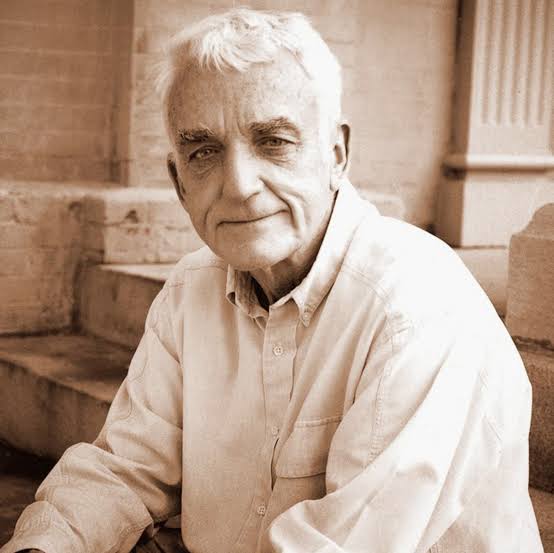
From Waiting for God
by Simone Weil

"We want to get behind beauty, but it is only a surface. It is like a mirror that reflects to us our own desire for good. It is a sphinx, an enigma, a sorrowfully irritating mystery. We want to feed on it, but it is only an object we can look on; it appears to us from a certain distance. The great sorrow of human life is knowing that to look and to eat are two different operations. Only on the other side of heaven, where God lives, are they one and the same operation. Children already experience this sorrow when they look at a cake for a long time and nearly regret eating it, but are powerless to help themselves. Maybe the vices, depravities and crimes are nearly always or even always in their essence attempts to eat beauty, to eat what one can only look at. Eve initiated this. If she lost our humanity by eating a fruit, the reverse attitude—looking at a fruit without eating it—must be what saves."

"God created through love and for love. God did not create anything except love itself, and the means to love. He created love in all its forms. He created beings capable of love from all possible distances. Because no other could do it, he himself went to the greatest possible distance, the infinite distance. This infinite distance between God and God, this supreme tearing apart, this agony beyond all others, this marvel of love, is the crucifixion. Nothing can be further from God than that which has been made accursed."
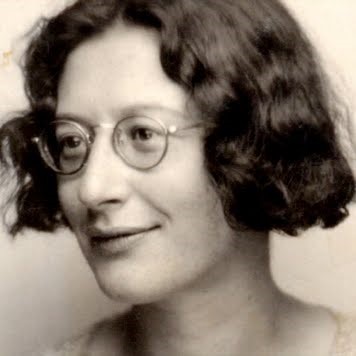
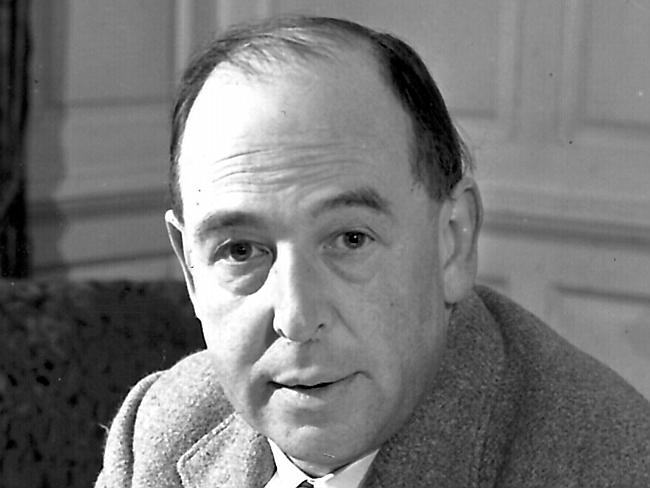
From The Weight of Glory
by C.S. Lewis

"It may be possible for each to think too much of his own potential glory hereafter; it is hardly possible for him to think too often or too deeply about that of his neighbor. The load, or weight, or burden of my neighbor’s glory should be laid daily on my back, a load so heavy that only humility can carry it, and the backs of the proud will be broken. It is a serious thing to live in a society of possible gods and goddesses, to remember that the dullest and most uninteresting person you talk to may one day be a creature which, if you saw it now, you would be strongly tempted to worship, or else a horror and a corruption such as you now meet, if at all, only in a nightmare. All day long we are, in some degree, helping each other to one or other of these destinations. It is in the light of these overwhelming possibilities, it is with the awe and the circumspection proper to them, that we should conduct all our dealings with one another, all friendships, all loves, all play, all politics. There are no ordinary people. You have never talked to a mere mortal. Nations, cultures, arts, civilization—these are mortal, and their life is to ours as the life of a gnat. But it is immortals whom we joke with, work with, marry, snub, and exploit—immortal horrors or everlasting splendors. This does not mean that we are to be perpetually solemn. We must play. But our merriment must be of that kind (and it is, in fact, the merriest kind) which exists between people who have, from the outset, taken each other seriously—no flippancy, no superiority, no presumption. And our charity must be a real and costly love, with deep feeling for the sins in spite of which we love the sinner—no mere tolerance or indulgence which parodies love as flippancy parodies merriment. Next to the Blessed Sacrament itself, your neighbor is the holiest object presented to your senses. If he is your Christian neighbor he is holy in almost the same way, for in him also Christ vere latitat—the glorifier and the glorified, Glory Himself, is truly hidden."
From The Everlasting Man
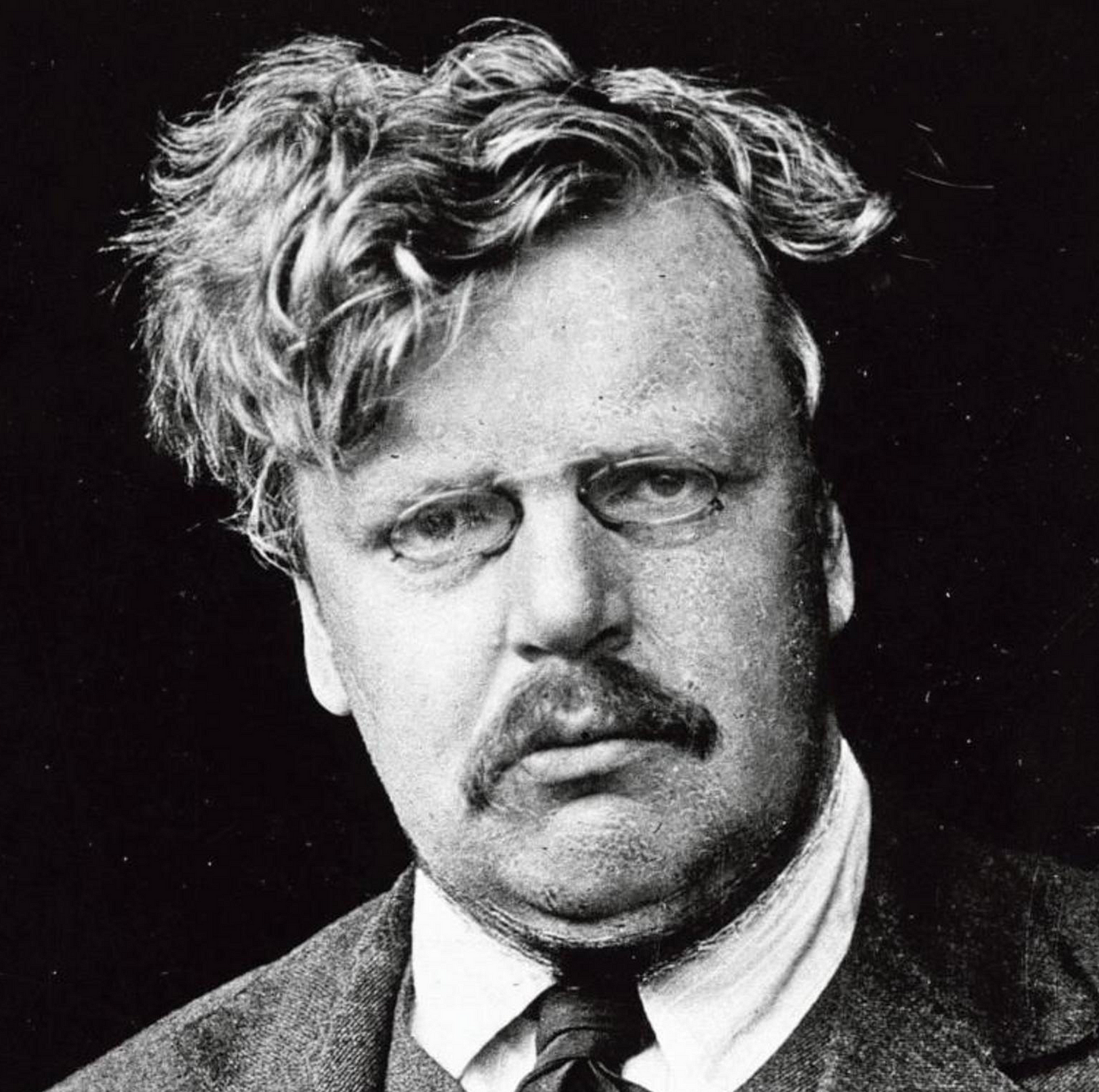
by G.K. Chesterton

"Our first sketch of the human story begins in a cave; the cave which popular science associates with the cave-man and in which practical discovery has really found archaic drawings of animals. The second half of human history, which is like a new creation of the world, also begins in a cave. There is even a shadow of such a fancy in the fact that animals were again present; for it was a cave used as a stable by the mountaineers of the uplands about Bethlehem; who still drive their cattle into such holes and caverns at night. It was here that a homeless couple had crept underground with the cattle when the doors of the crowded caravanserai had been shut in their faces; and it was here beneath the very feet of the passers-by, in a cellar under the very floor of the world, that Jesus Christ was born. But in that second creation there was indeed something symbolic in the roots of the primeval rock or the horns of the prehistoric herd. God also was a cave-man, and had also traced strange shapes of creatures, curiously coloured, upon the wall of the world; but the pictures that he made had come to life.

A mass of legend and literature, which increases and will never end, has repeated and rung the changes on that single paradox; that the hands that had made the sun and stars were yet too small to reach the huge heads of the cattle. And upon this paradox, we might almost say upon this jest, all the literature of our faith is founded."
From 1 John Chapter 4
by John the Apostle

7Beloved, let us love one another, because love comes from God. Everyone who loves has been born of God and knows God. 8Whoever does not love does not know God, because God is love.

9Now this is how God’s love was revealed among us: God sent His one and only Son into the world, so that we might live through Him. 10And love consists in this: not that we loved God, but that He loved us and sent His Son as the atoning sacrificed for our sins.

11Beloved, if God so loved us, then we also ought to love one another. 12No one has ever seen God; but if we love one another, God remains in us, and His love is perfected in us.

13By this we know that we remain in Him, and He in us: God the Father has given us of His Spirit. 14And we have seen and testify that the Father has sent His Son to be the Savior of the world.

15If anyone confesses that Jesus is the Son of God, God abides in him, and he in God. 16This is how we come to know and believe the love that God has for us: God is love! Whoever abides in love abides in God, and God in him. 17In this way, love has been perfected among us, so that we may have confidence on the day of judgment; for in this world we are just like Him.

18There is no fear in love, but perfect love drives out all fear, because fear involves punishment. The one who fears God has not been perfected in love. Again, we love because He first loved us.

 Poems and Other Pieces
Leave a comment